Google’s search algorithm is incredibly complicated. I could explain it to you, but we would both have a bad time.
Their YouTube algorithm, on the other hand, is incredibly simple. I’m going to explain it to you, and we’re going to have a great time!
The most important thing to remember is that YouTube’s number one goal is to keep people watching YouTube. So they’re going to recommend videos about topics that you’re interested in, and they’re going to prioritize those recommendations based on what gets clicked and watched for a long time.
Whether you’re posting videos about automated TIG welding, the role of CNC machines in aerospace manufacturing or your own independently produced stand-up comedy special, the main factors you need to optimize for are the same: keywords, average view duration and thumbnail clickthrough rate.
And you don’t just have to take my word for it. I studied the algorithm before releasing my comedy special. And what’s that? More than 80,000 views, all earned organically.
Is this whole blog just an opportunity for me to brag and shamelessly promote my comedy? Perhaps (headlining dates throughout the Midwest in 2026). Even so, there are still a few valuable lessons you can take and apply to your brand’s videos.
Keywords
YouTube is technically the second biggest search engine in the world. Similar to how Google’s search engine works, people search for something and YouTube finds videos related to what they searched for. And beyond just the search results, YouTube also recommends videos on the home page and suggested videos sections based on the topics that you’ve previously expressed an interest in.
YouTube can’t really watch videos … yet. So keywords are a big part of how they know what your video is about.
They use the words and phrases in your title and description to categorize your content and match it to users interested in your topic. So when you write the titles and descriptions for your videos, you need to use popular keywords so YouTube can get your videos in front of the right people.
Hint: your Google Ad campaigns and SEO program are a great source for the best keywords to use.
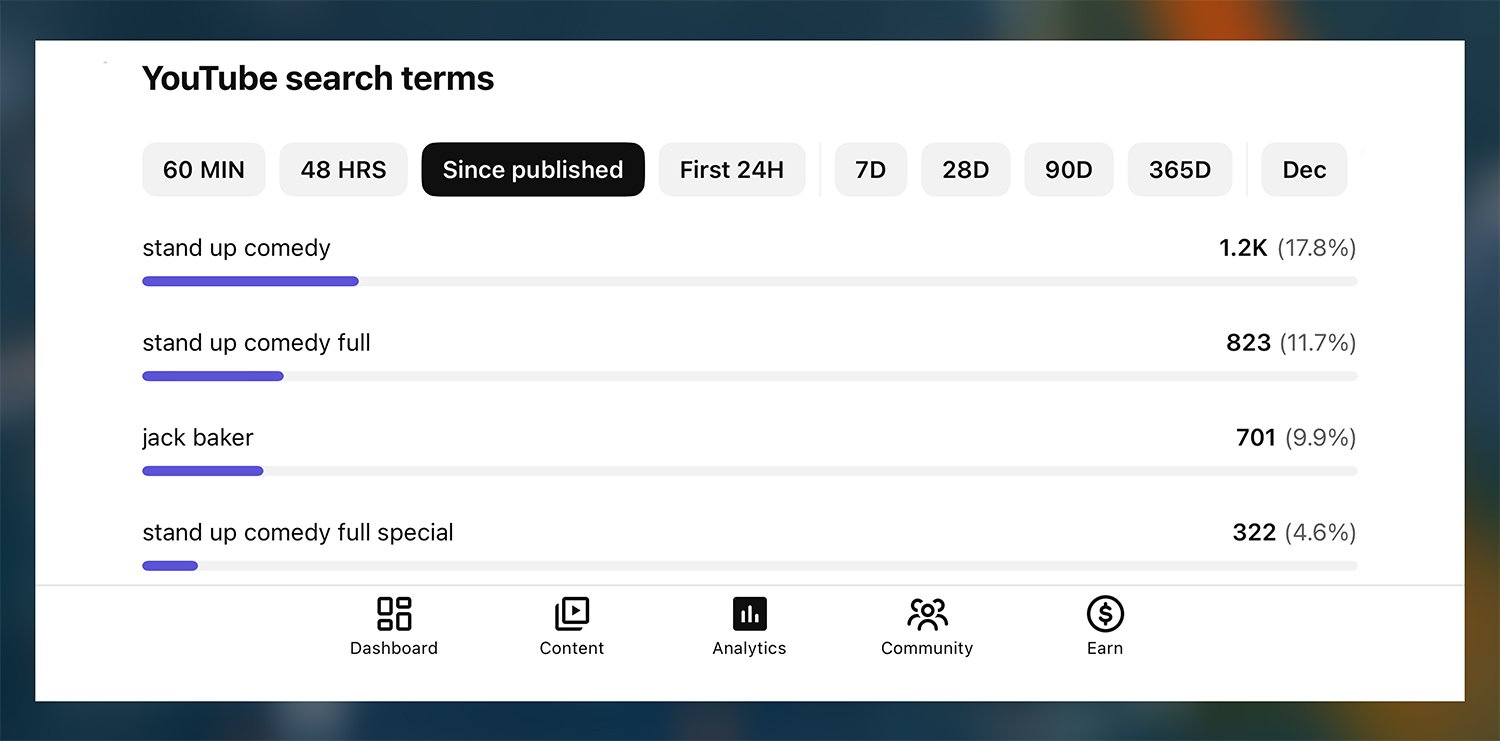
My special “Jack Baker’s Disease | A Full Comedy Special” earned a couple thousand views from variations of the keywords “full comedy special.” And one very confused view from someone searching for a Resident Evil 7 character named Jack Baker.
While industrial manufacturing terms won’t have as many people searching for them as standup comedy, they’ll also have fewer videos competing. This means it will be easier for you to appear and get those sweet, sweet views.
Average View Duration
YouTube wants people to keep watching YouTube, so they’re going to recommend videos that people watch for a long time. The longer they stay on your video, the better.
First, this means your video needs to be really good. It sounds simple, but you’d be surprised how many people skip this step.
Your video needs engaging content and high production value. You also need to start quickly and hook viewers right from the beginning. The worst thing you can do is have a video that people start watching, but bounce away from quickly. This metric is the mean view duration, not median, so one- or two-second views will tank your average duration and decrease your reach.
Thumbnail Clickthrough Rate
YouTube is going to recommend videos that get clicked on from the home page and suggested video sections, so you need to make an image that people want to click.
It helps when you have a Creative Director who owes you a favor… Thanks, Doug!
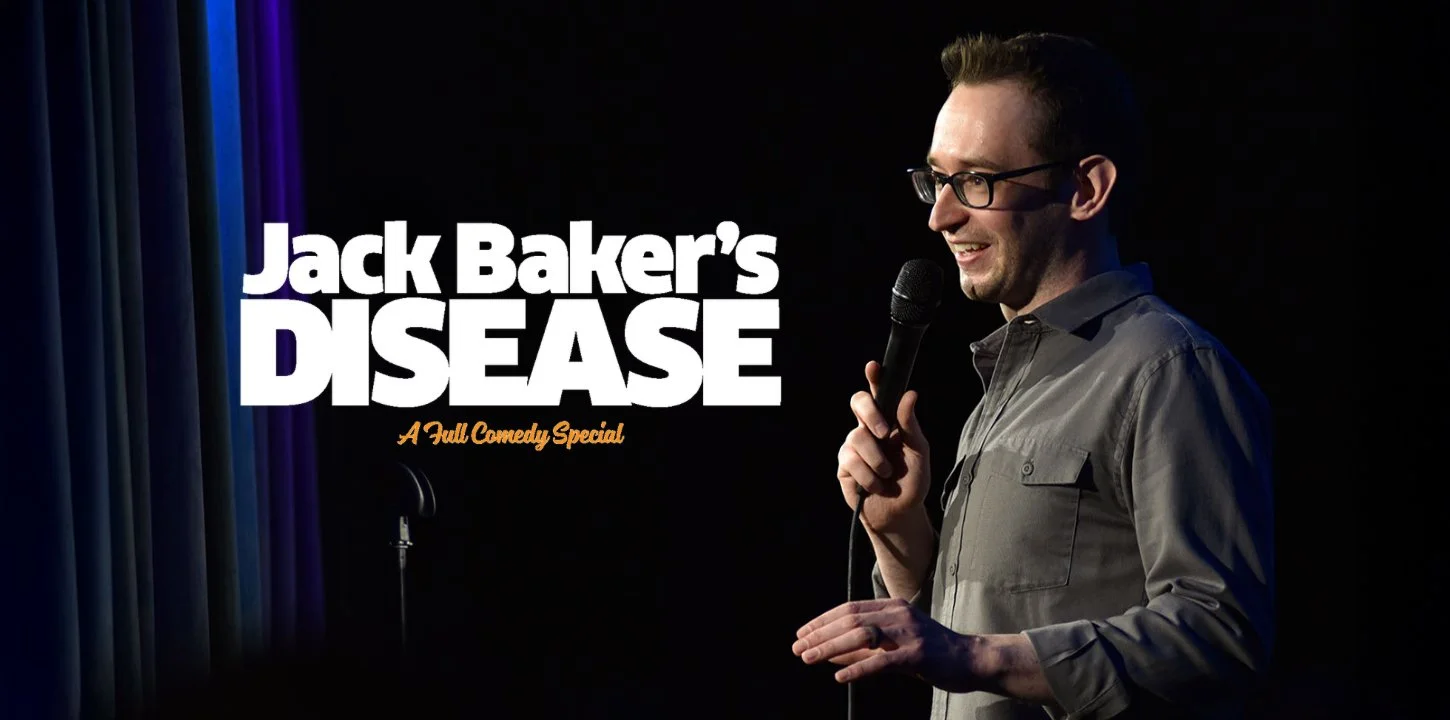
But it’s not enough to just make a really clickable image. Your thumbnail needs to help viewers know what they’re signing up for. Remember, average view duration is also a key factor in the algorithm. You don’t want viewers clicking because it’s an interesting thumbnail, but then leaving right away because the video isn’t what they were expecting.
Increasing your clickthrough rate is directly correlated with increased views. Let’s dive into some data.
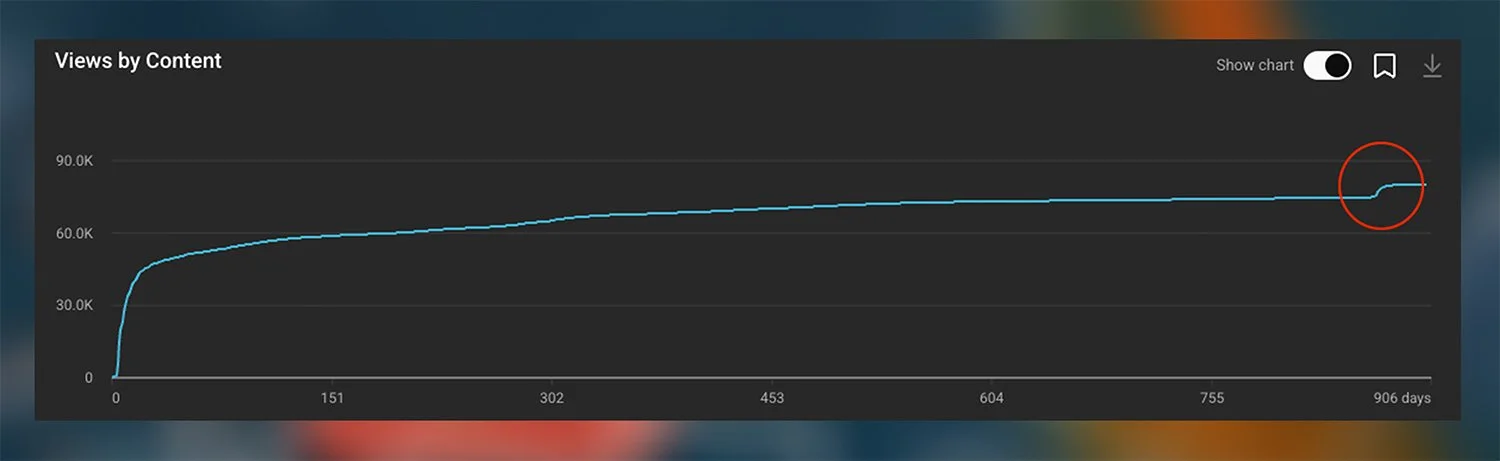
This chart shows the views on my comedy special. It starts with a lot of views in the first month after launch and, eventually, plateaus. I was stuck between 74 and 75 thousand views for over a year. But over the course of one wonderful week in November 2025 (circled above), I saw a big jump and earned 5,000 views.
What happened?
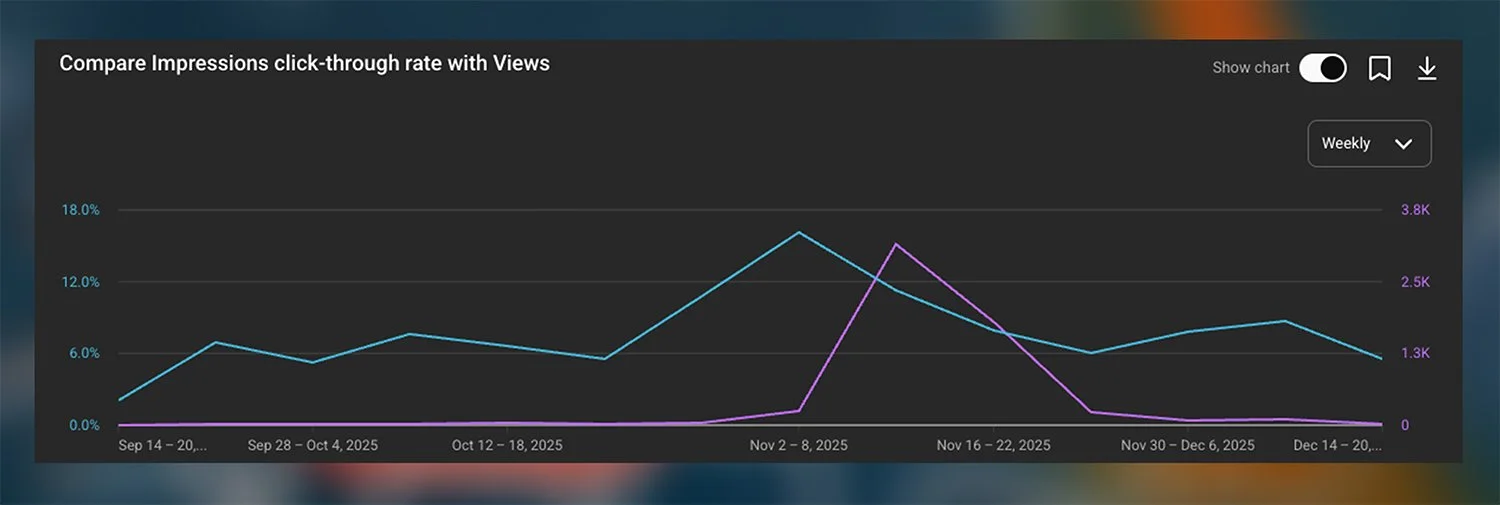
When you zoom in on that time period, you can see that a spike in clickthrough rate (the blue line above) led to a big jump in views (the purple line).
This makes sense. When more than 12% of users who see a thumbnail for a video click on it, YouTube is going to notice that increased interest and recommend it to more people. But when the clickthrough rate declined closer to the average of 6.1%, views decreased again.
Bonus Point: It’s Not Just About YouTube
That spike in clickthrough rate occurred because I promoted the special after my shows. I give away a little card with a QR code that takes people right to it. Driving direct traffic to the video increased engagement metrics, which in turn fed the algorithm and got more people to see it. So beyond relying on YouTube to generate views, think about how you can use your other marketing channels to increase viewership.
Before posting your next video, make sure you have it tagged with the right keywords, create a clickable thumbnail image and optimize for a long average view duration. Unless, of course, you don’t want people to see it. A strange goal, but listen to your heart.
If you have more questions about your own YouTube channel or any other digital marketing goals, get in touch with Ivor Andrew. Optimizing these campaigns is one of the things we do at a high level every day.
And also, watch my comedy special.
Good day.