
This is how we create a B2B brand voice
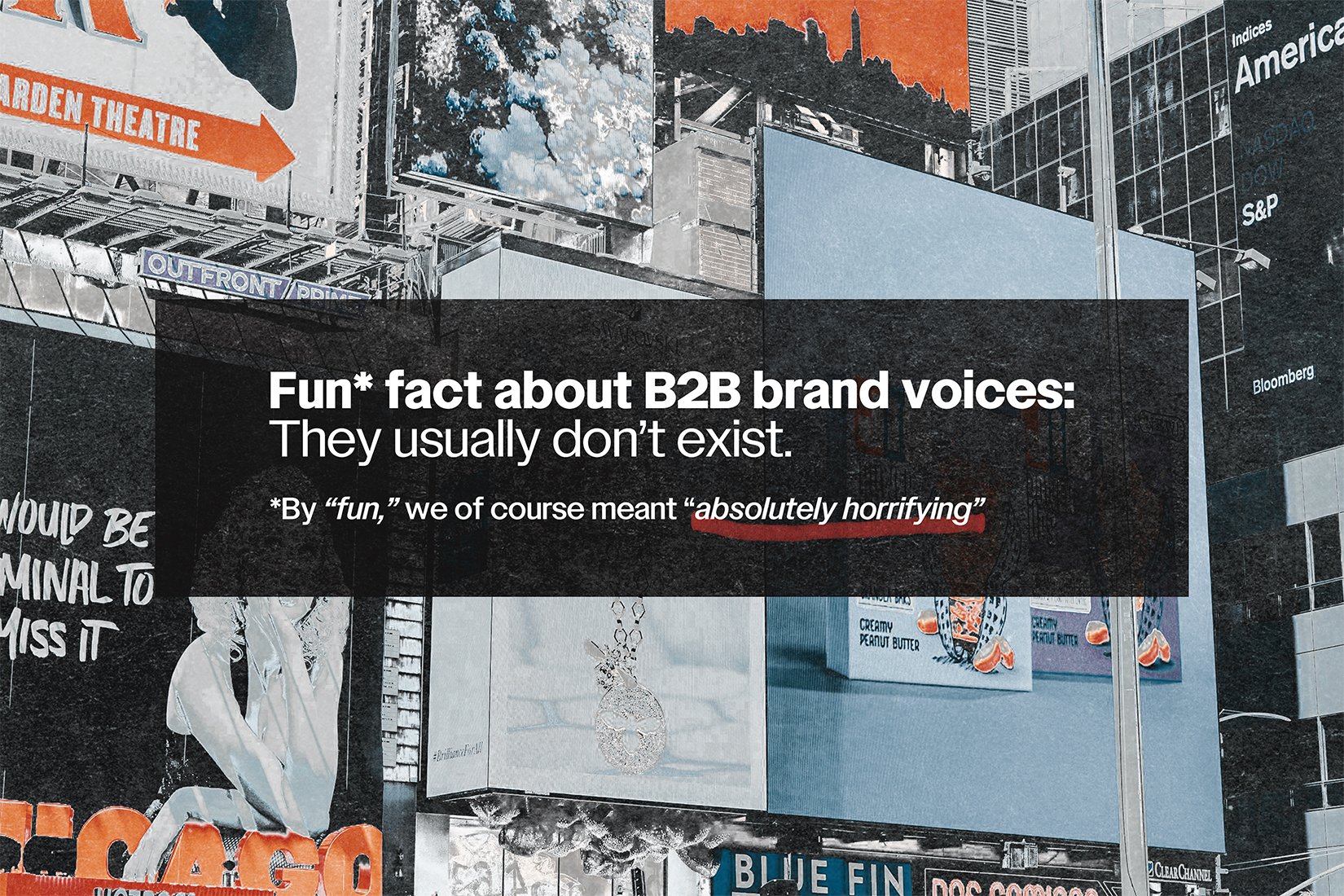
We’re big fans of builders at Ivor Andrew. Just about the entirety of our client roster resides in the B2B manufacturing space—global companies that make impeccable products and back them up with always-there support.
We like to build, too. Our creative department, filled with design, writing and video, can quickly position your company in a way that’s compelling and brings those delicious leads to your door. On the writing side, a huge part of that positioning is the B2B brand voice.
What is a brand voice?
Also, should B2B be different from B2C?
You can easily Google that first question to find the universal answer, but here’s our simplified take: the B2B brand voice is how your company talks.
Obviously, this shows up in your marketing like social media, paid advertising, website copy and video content. But brand voice is also how you communicate with customers, partners and colleagues in-person. We’ll use a famous B2C example here: let’s say you’re at Chick-fil-a and you’re handed your food. You say thank you. What do you receive in return?
Two words: “My pleasure.” The company spent a couple years adopting that reply nationwide because they felt it showed elevated kindness and hospitality. Love it or hate it, it’s rock-solid and consistent brand voice that differentiates Chick-fil-a from the rest of the American fast food chains.
When we create your B2B brand voice, we like to imagine your company as a good friend. If your company were a person, what personality attributes would it have? That’s what we work to develop.
As for that second question, should B2B and B2C brand voices be different, let’s turn it over to our lead writer, Luke (who’s actually writing this blog post in third person already). He’s pretty adamant that despite the many differences between B2B and B2C, all brand voices should be conversational, entertaining and human. So that’s what we develop here at Ivor Andrew.
Is it important to have a B2B brand voice?
By the way, we’re still going to say “B2B brand voice” to make Google (and Jack, our digital marketing strategist) happy.
Here’s what we’ve found when we start up with a new client: there’s not a brand voice, and they’re doing fine. Good products are being made, deliveries are on time and customers are pretty happy.
But when we dig deeper, the sales team is always spending too much time nurturing existing customers and not prospecting nearly enough. And when they do get time to hunt for new business, they often have to make the introduction themselves, because the picture those prospects have of their business is either inaccurate or it doesn’t exist.
What’s more, departments are often pretty siloed, which means inefficient work is being done at times, and staff doesn’t always feel like they’re part of a larger team contributing to big-picture legacy building.
A B2B brand voice, surprisingly enough, can fix all that. It can warm up cold leads before the sales team even makes an introduction, and it can get everyone inside the company singing from the same songbook, knowing why they show up to work every day and remembering that their previously-separate departments are part of the same team.
So yes, having a B2B brand voice is important. Can your business thrive without one? Yes. Are you missing out on efficiencies, leads and revenue without one? Also yes.
The why of the brand voice: incredible transformations ahead
Let’s jump back to Chick-fil-a for a minute. “My pleasure” isn’t merely a couple words that are robotically given in a call-and-response. It’s a reminder that hospitality and service are slightly more important there. And it’s true: when you ask a CFA employee for something, be it extra sauce or a refill or a cleanup because your beautiful, perfect children dumped their sodas on each other, you’ll get it quickly and cheerfully. The service truly does feel elevated compared to other fast food options.
In other words, a good brand voice can coach people to act in a customer’s best interest, and eventually, it becomes so cemented that it’s done naturally. Chick-fil-a, by the way, sits comfortably at #3 in highest-grossing U.S. food chains, only trailing McDonald’s and Starbucks, despite being closed on Sundays and having a quarter of the locations that those two have.
A B2B brand voice is transformative, too
When we began working with Doosan Machine Tools, a Korean manufacturer of CNC turning centers and machining centers, the company sat at #5 in global market share and felt inferior to Japanese competition. We created the Machine Greatness brand and voice, and it injected confidence into the organization and helped them see themselves differently and accurately. A handful of years later, Doosan had vaulted to #3 in market share and had a valuation more than double what it was before.
These transformations are possible in every sector, whether it’s B2B or B2C. There is real and astounding value to be captured with an on-point and company-wide brand voice, and not enough B2B organizations have figured it out.
How to build your B2B brand voice
Here’s a list of tips as you develop your own B2B brand voice. If you decide to hire us to take care of it (great choice, by the way), this is what you can expect.
Have curiosity and empathy. Put yourself in the shoes of your customers. What are their biggest pain points that you can solve? What do they love about their job? Why do they do it? Answer those questions, then ask them again, but to your colleagues.
Dig for your differentiator. There’s something that your company does better than the competition. When you identify what that is, it should be the bedrock of your brand voice.
Choose your brand’s personality traits. Ask this question: if our company were actually a person, how would people describe it? Grab a handful of personality traits that fit perfectly, then decide how those traits come to life in marketing pieces and in-person conversations.
Import your new brand voice into the company’s brand guidelines. A brand voice only works if people know it exists, after all.
Do you have outdated, incomplete or non-existent brand guidelines? It’s another one of our specialties.